


Hi Devoted / Occasional / Accidental readers of “Is Anyone OK?”
Through Social Cohesion Lab, I have been conducting long-form interviews with regular people for the last 7 months, and have just completed the 30th published conversation. I’ve done roughly 60 hours of direct interviews, and have published over 90,000 words worth of personal narrative. Jess has done more than 100 unique portraits and illustrations.
Doing this has been a real treat and an extraordinary window into the varied lives of people across the country. Click here for the full list if there are any you missed or want to revisit.
The goal I set at the beginning of the project was to complete at least 50 interviews over the course of about 1 year, and with about 5 more already in the pipeline, we are coming up to 2/3rds of the way through. But as the end comes into view, I’ve realized 3 things:
I haven’t paused to look at the cohort of interview subjects as a whole, and reflect on who might be missing from a semi-representative sample1 of American lives,
I haven’t paused to consider whether there are any key questions which might be missing from my typical roster of interview prompts,
And I haven’t asked our readers to weigh in on these same questions.
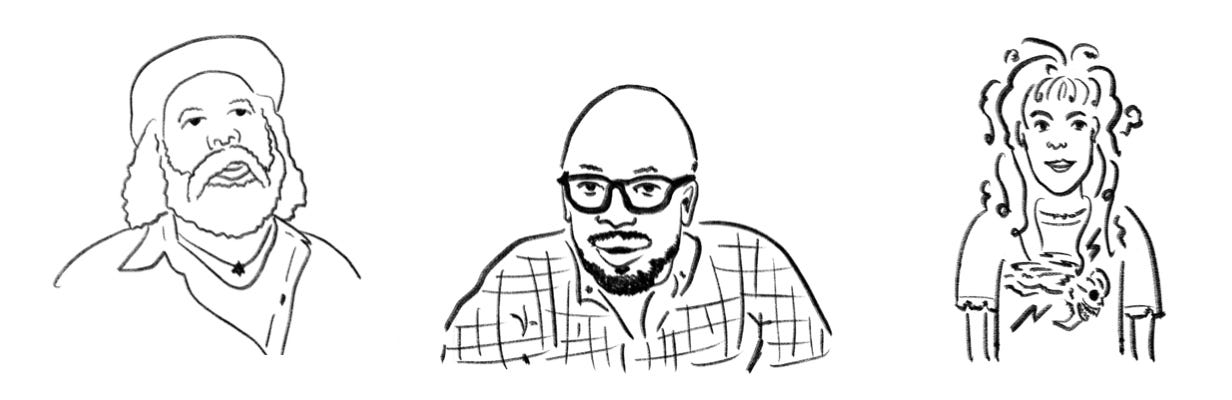
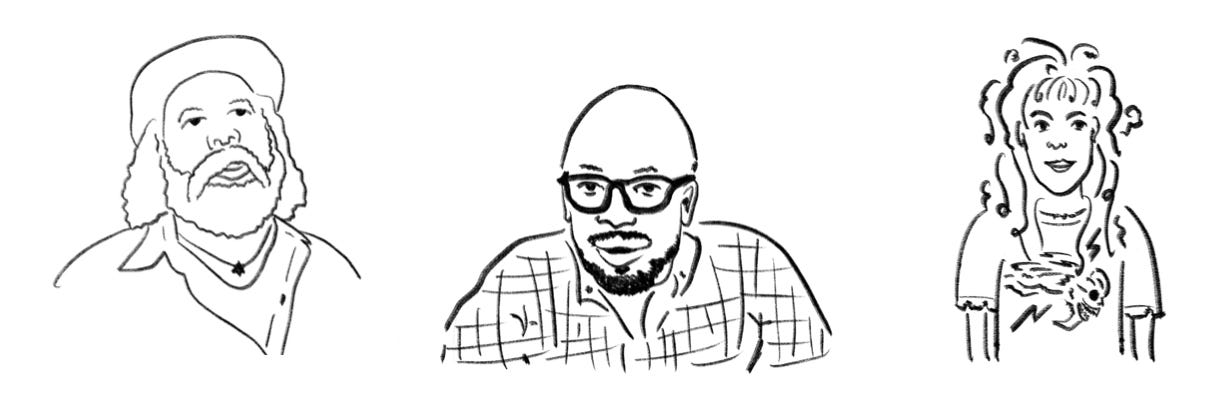
This project, by definition, will be incomplete. Behind the scenes, I’ve considered things like age, gender, geography, race and political ideology in trying to construct a meaningful (if not statistically complete) narrative sample. But honestly, I could just as reasonably choose to consider things like religious beliefs, employment, family size, financial status, education or many other factors. There are infinite ways to construct a sample group from which to draw meaningful conclusions about how people feel their lives are going and why they feel that way.
And even if we did have a fully representative sample, lots of people are mixed bags (and that becomes more apparent through longer qualitative conversations, in contrast to quantitative surveys, which sort of flatten opinions into specific clusters.) People have complex, sometimes apparently contradictory beliefs about all sorts of things. So even if you have a really “representative” group of people, that doesn’t mean you’re going to be able to fully infer general feelings about something as broad as life satisfaction. Two people of the same race, age, geography, and income might have totally different opinions about their parents.
Still, maybe you have been reading along and wondering, Why has he not asked this or that person this or that question? Asking new questions isn’t that hard: I usually have a few initial prompts and ideas, and then let the conversation be led by the interest / emotional enthusiasm of the interview subject, but others can usually be raised organically.
In short, I know that by conducting 50 interviews we will never cover the full range of American life-satisfaction, but I want to take time for a vibe check to suss out any glaring omissions. Are there people or ideologies or histories or stories or topics which you think would enrich this project?
You can help in two specific ways:
You can send me a private message, or comment on this post, if you think of any person or questions you’d like to see. “Not enough Cowboys are interviewed!” or “Ask people whether they like mayonnaise!” You can also fill in this form.
You can send me a private message with a specific person you’d like to recommend for an interview if you think they might bring a perspective which is missing. As a reminder, the interviews are anonymous and you can also volunteer yourself: info@socialcohesionlab.org

I have my own ideas about who is currently missing. I plan to take a few weeks now, to give you all a bit of time to send over any suggestions, combine them with my own instincts, and track down subjects who fit the bill.
As always, I really appreciate the interest and enthusiasm I have felt from readers while producing this project, and look forward to continuing soon!
Ben

A statistically representative sample would probably require over 1000 interviews, but qualitative focus groups regularly build narratives around the thoughts of 10 people in a room talking for an hour, so that’s why I say, “semi-representative”.
Your interviews provide an interesting and insightful glimpse of Americana (the people, the multifaceted ethos, and this particular sociopolitical moment) which seems to talk with and to the readers rather than at us. It reminds me of the radio and television programs to which I would listen and watch in the 70s and 80s, such as “The Rest of the Story” and Real People, but with a bit more depth.
That somehow reminded me of an old movie named "Magic Town" by William A. Wellman. Statistics is such a complex thing! I've been reading Pew Research Center's reports for a while, so maybe they could be a source of inspiration.